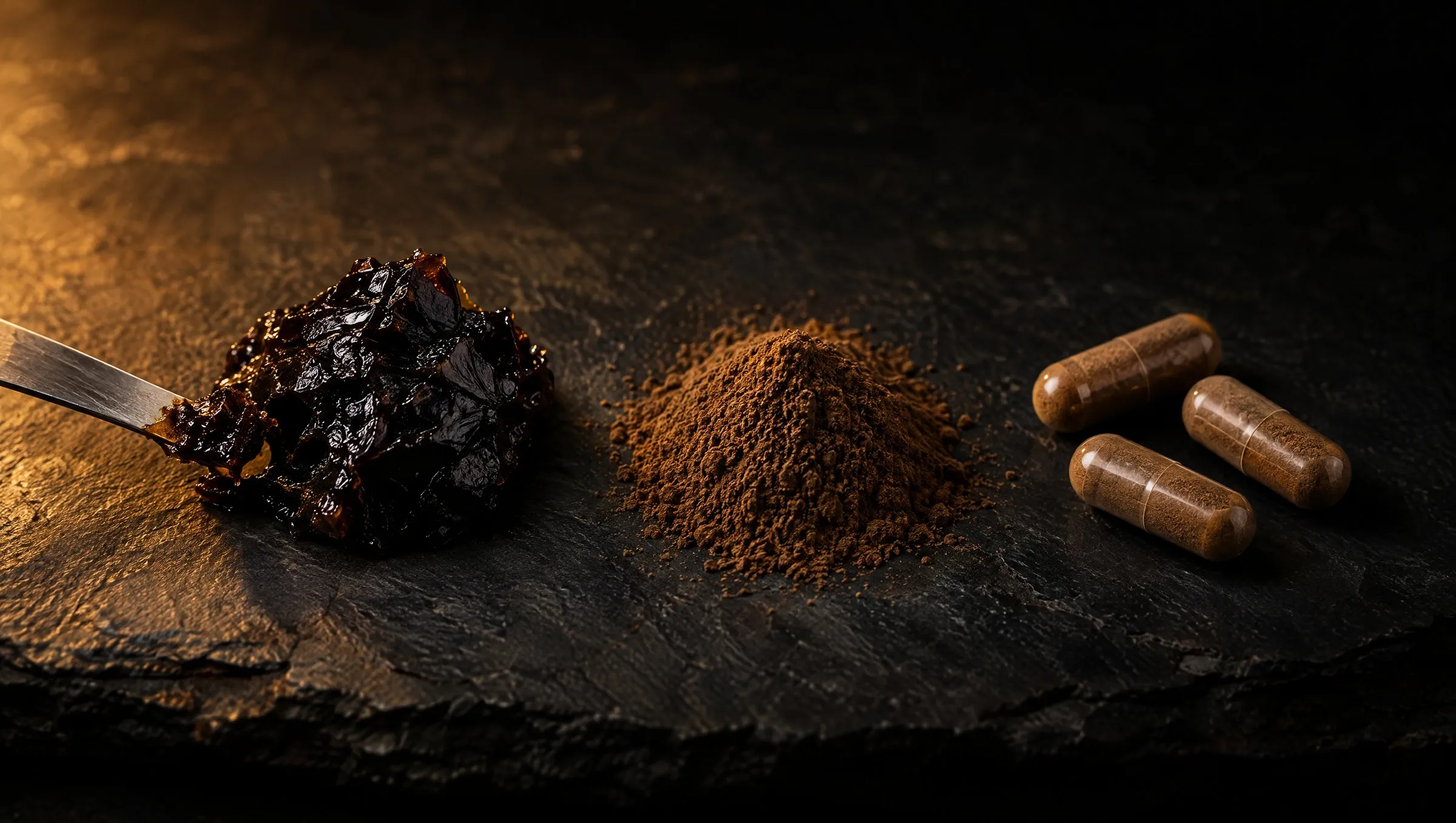
Shilajit resin is the whole, least processed form: a dark, sticky paste you dissolve in a warm drink. Capsules, powder, gummies and drops usually hold a dried or diluted extract, often with carriers, sugar or other ingredients added, and no study has compared the forms head to head.
So the real differences are practical: how each form is made, what else is in a serving, taste, price, and how easily you can check what you’re buying. Here’s how they compare, who each suits, and how to switch to resin.
What forms does shilajit come in?
EU law defines a food supplement by its “dose form”: capsules, pastilles, tablets, pills, sachets of powder, ampoules of liquid and drop bottles, all designed to be taken in small measured amounts 1. Shilajit is sold in most of them. These are the five you’ll meet most often.
| Form | What it is | How it’s made | Typical serving |
|---|---|---|---|
| Resin | Whole shilajit as a glossy, sticky paste | Cleaned of rock and debris, then concentrated; nothing added in pure resin | About 100 mg, a pea-sized piece |
| Capsules | Dried shilajit or extract in a gelatine or plant shell | Extracted, dried to a powder, usually mixed with carriers | Set by the brand; check mg per capsule |
| Powder | Dried, ground shilajit or extract | Dried and milled, sometimes with an anti-caking agent | A small scoop, as the label says |
| Gummies | Extract in a sweet, chewy base | Blended with sugar or sweetener, a gelling agent, flavour and colour | One or two gummies |
| Liquid drops | Extract dissolved in water or another liquid | Extracted and diluted, sometimes with a preservative | Drops or a dropperful |
And here’s how they feel to live with day to day.
| Form | Taste and ease | What to check on the label | Price per serving |
|---|---|---|---|
| Resin | Earthy and smoky; needs a warm drink and two minutes | Origin, batch number, lab report, “nothing added” | Often the lowest, as a serving is small |
| Capsules | No taste; easy to swallow and pack | Mg of shilajit per capsule, extract strength, carriers | Compare per mg of shilajit, not per capsule |
| Powder | Bitter; stirs into drinks and smoothies | Added agents, origin, lab report | Compare per gram of shilajit |
| Gummies | Sweet and chewy; the easiest to take | Sugar or sweetener on the list, mg of shilajit per gummy | You pay for the sweet base too |
| Liquid drops | Diluted; easy to measure | Mg of shilajit per ml, preservatives | Compare per mg of shilajit |
How is each form of shilajit made?
Every form starts as the same dark exudate seeping from mountain rock. What happens next decides what ends up in your cup.
Resin is the closest to the original. The raw material is cleaned of stone, sand and plant debris and gently concentrated back to a thick paste. Pure resin has nothing added.
Capsules go further. Several manufacturers process shilajit and sell it in capsule form 2. Usually the shilajit is extracted, dried to a powder and blended with carriers that help the powder flow and fill evenly. One trial listed exactly what went into its shilajit capsules: gelatine, microcrystalline cellulose, croscarmellose sodium, fumed silicon dioxide and magnesium stearate 3. That’s normal for a capsule, but each one holds more than shilajit.
Powder is dried, milled shilajit or extract. Loose powder can clump, so some brands add an anti-caking agent.
Gummies change the most. To make a chewy sweet, the extract is mixed into a base of sugar or sweetener, a gelling agent such as gelatine or pectin, flavourings and colours. That’s the trade: a pleasant taste in exchange for a serving in which shilajit is only one of several ingredients.
What should you check on the label?
The ingredients list tells you more than the front of the pack. EU rules require ingredients to be listed in descending order of weight 4. If sugar or glucose syrup comes first on a gummy label, it’s the main ingredient.
Additives must be named by their job, followed by their specific name or E number, such as “anti-caking agent” or “gelling agent” 5. One catch for gummies: food supplements don’t have to carry the nutrition table you see on other foods 6. So you may not find grams of sugar per gummy, and the ingredients list is your best guide.
Then look for how much shilajit is in each capsule, gummy or dropperful. When researchers tested 25 melatonin gummies sold in the US, the melatonin measured ranged from 74% to 347% of the amount on the label, and only 3 were within 10% of it 7. That study wasn’t about shilajit, and we couldn’t find one that has checked shilajit gummies. It’s a good reason to ask any brand for a lab report.
Does resin absorb better than capsules?
You’ll see this claim on many shop pages, but no study has compared how the body takes up resin, capsules, powder or gummies. The authors of the first published trial of resin wrote that comparative trials against standardised extracts are still needed 8.
So any claim that one form “absorbs better” is a guess. The honest differences are the ones you can see: what’s added, how it tastes and how you take it.
What forms did the human studies use?
Most published human trials gave a purified shilajit extract, usually in capsules, not raw resin 8.
| Trial | Who took part | What they took | Form |
|---|---|---|---|
| 2010 9 | 35 men | 100 mg processed shilajit twice a day, 90 days | Capsule |
| 2019 10 | 63 active young men | 250 or 500 mg purified extract a day, 8 weeks | Capsule |
| 2019 3 | 45 women aged 30 to 65 | 125 or 250 mg extract twice a day, 14 weeks | Capsule |
| 2020 11 | 160 adults after a shinbone fracture | Two 500 mg capsules a day, 28 days | Capsule |
| 2026 8 | 25 healthy men aged 21 to 55 | 250 mg resin twice a day, 28 days | Resin in warm water |
Other trials describe a “purified” shilajit 12 or a standardised water extract 13 without naming the form in their summaries. The 2026 study is the only resin trial we found. Its participants dissolved the resin in about 200 ml of warm water with meals 8. It was small and had no comparison group, so it can’t say which form is better.
Why does form matter when you check quality?
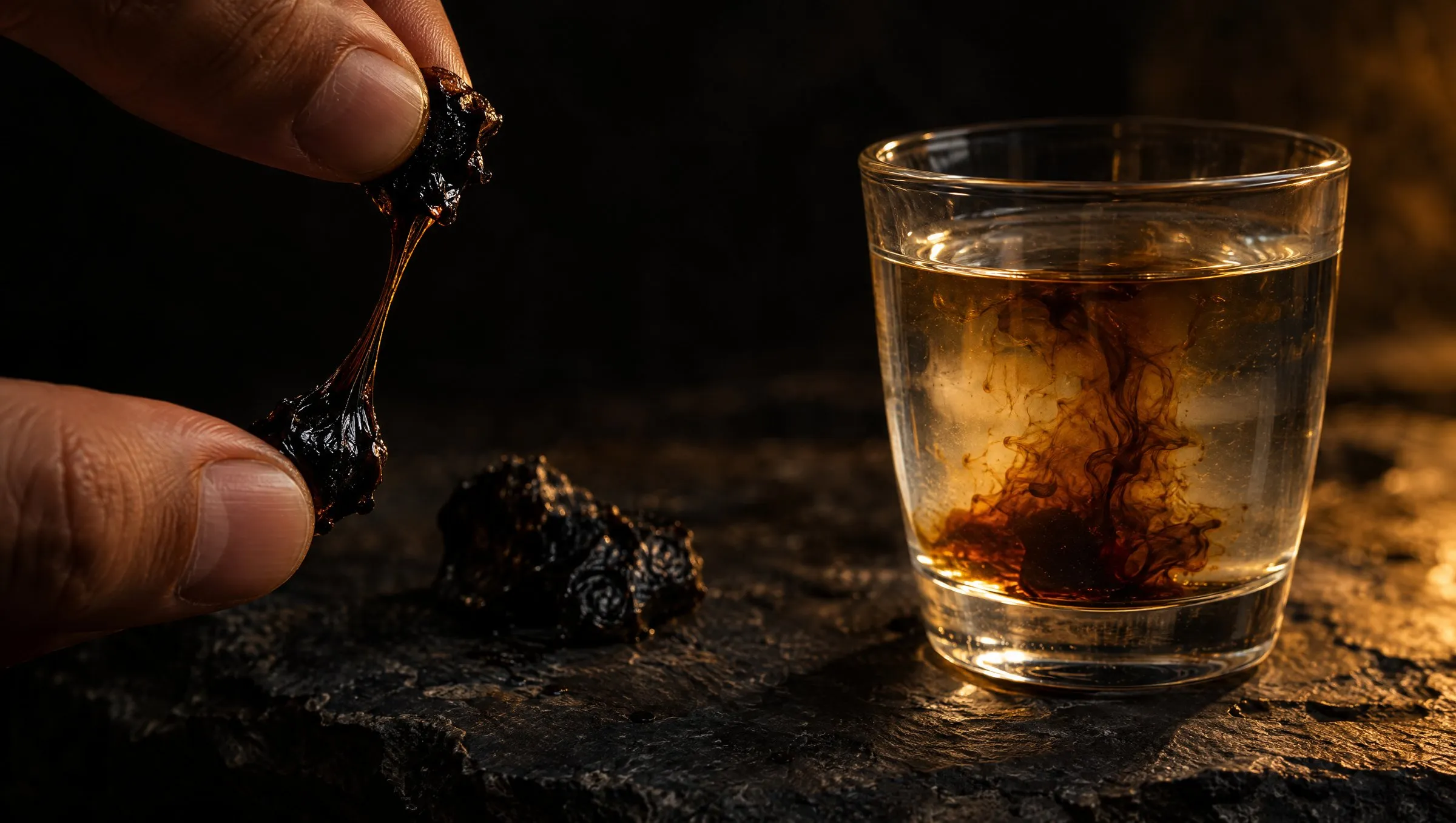
Because resin is the only form you can judge with your own senses. You can see its gloss, smell its earthy, smoky scent, and watch it melt into a warm drink. Once shilajit is dried, ground and sealed in a capsule or set into a gummy, those clues are gone. You’re relying entirely on the label and the lab report.
That doesn’t make every capsule bad. It just asks for more trust. Our guide to real vs fake shilajit explains which home checks tell you something and which are myths.
With any form, the test that matters is a batch report from an accredited lab. Hilasti’s resin comes from a batch tested for lead, arsenic, cadmium and mercury by an accredited EU laboratory. Every figure, the report number and the batch are on our lab results page.
Which form of shilajit is right for you?
Each form has a fair case, and the best one is the one you’ll take as the label suggests.
- Capsules suit you if you travel often or can’t stand bitter tastes. Look for the mg per capsule and a lab report.
- Powder suits a daily smoothie. Check for added agents.
- Gummies suit you if taste is the only thing stopping you. Check where sugar sits on the list.
- Drops are easy to measure into water. Check the strength per ml.
- Resin suits you if you want shilajit with nothing added and a ritual you can see and taste.
Our own choice is resin. Hilasti’s jar holds raw Himalayan resin, harvested in Nepal at around 4,800 m, with no carriers, sugar or flavourings: shilajit and nothing else. You can read more about where it forms in what is shilajit.
What is it like to take resin?
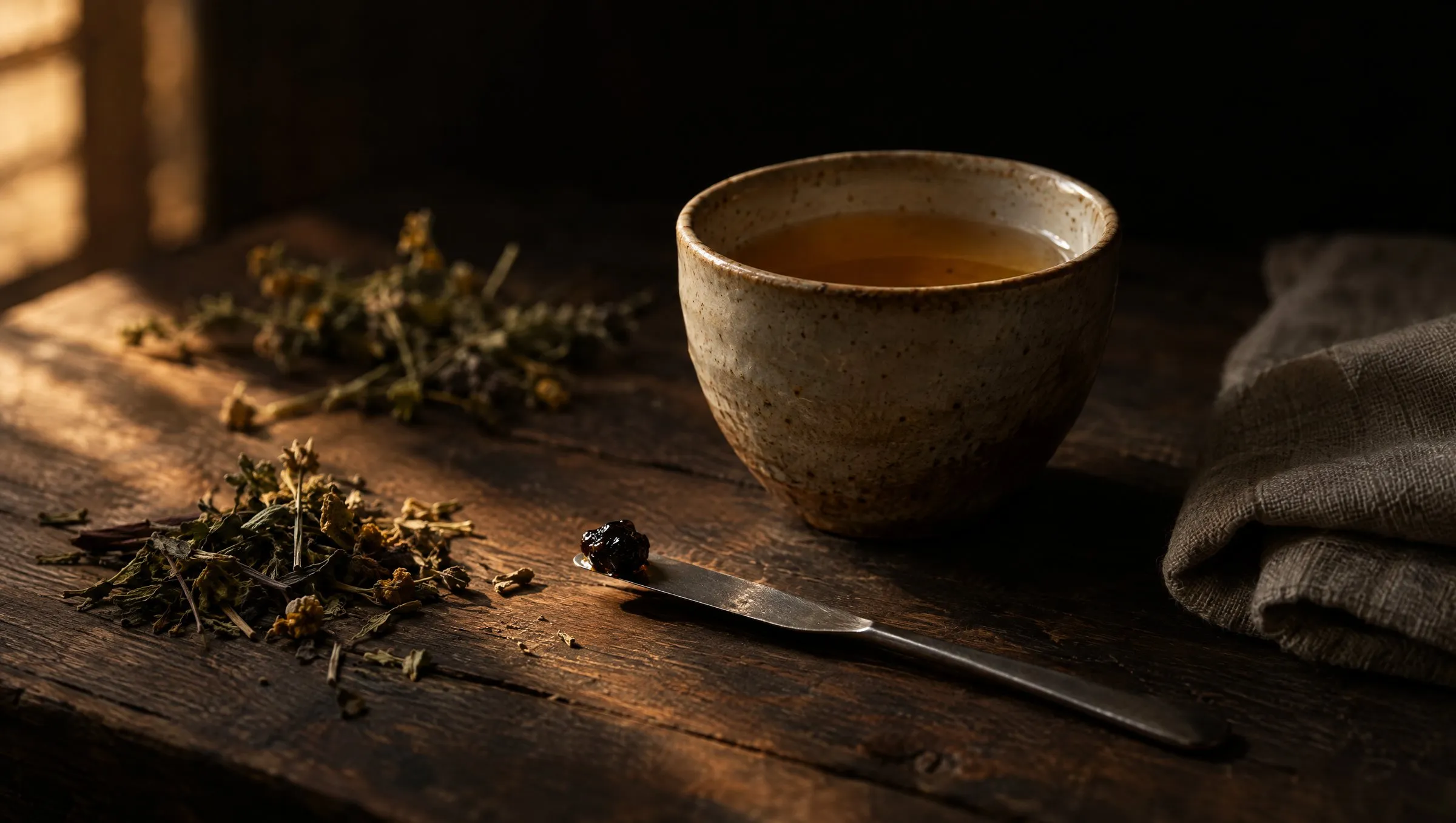
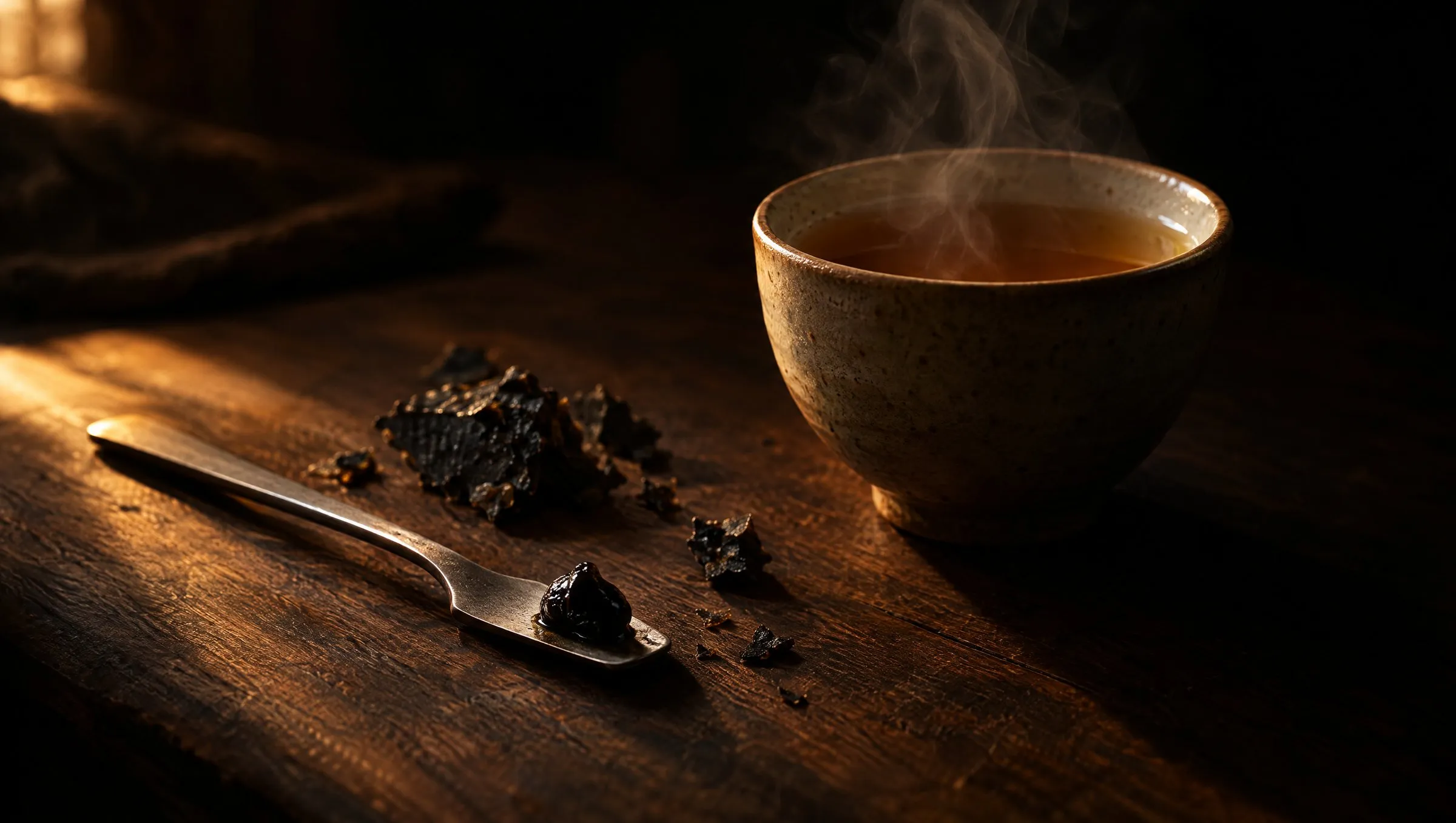
It’s slower than a capsule, and that’s much of the appeal. You warm a cup of water, tea or milk, stir in a pea-sized piece and watch the drink turn an even amber-brown. The taste is earthy, smoky and a little bitter, with a mineral finish.
Many people come to love those two minutes as a quiet morning pause. Because Hilasti’s resin has no sweetener or flavouring, you choose how it tastes: warm milk, black tea or a spoon of honey all round it off. Our guide on how to take shilajit has the drinks people like best.
How do you switch from capsules to resin?
- Don’t convert milligrams. Dried extract isn’t the same as resin, so follow the serving on your new label. EU law requires every supplement to state its recommended daily portion 14.
- Start small. A piece the size of a grain of rice is plenty for the first few days, then move up to a pea-sized serving of about 100 mg.
- Measure the same way each day. Every Hilasti jar comes with a steel spatula. Half of the wide end is one serving, with no guessing and no sticky fingers.
- Use a warm drink. Hot but not boiling, with filtered or bottled water rather than tap.
- Don’t double up. Finish your capsules first, then start the jar.
At about 100 mg a serving, a 30 g jar holds around 300 servings. Storage and serving are covered in our FAQ, and you can compare both jar sizes in our shop.
Try the resin itself
If you’d like to taste shilajit in its whole form, our raw Himalayan shilajit resin is harvested in Nepal at around 4,800 m, with nothing added, from a lab-tested batch. The steel spatula is in the box, so all that’s left is a warm cup and a quiet minute.
This article is for information only and isn’t medical advice. Speak to your doctor or pharmacist before taking a supplement, especially if you’re pregnant, breastfeeding, take medication or have a health condition.