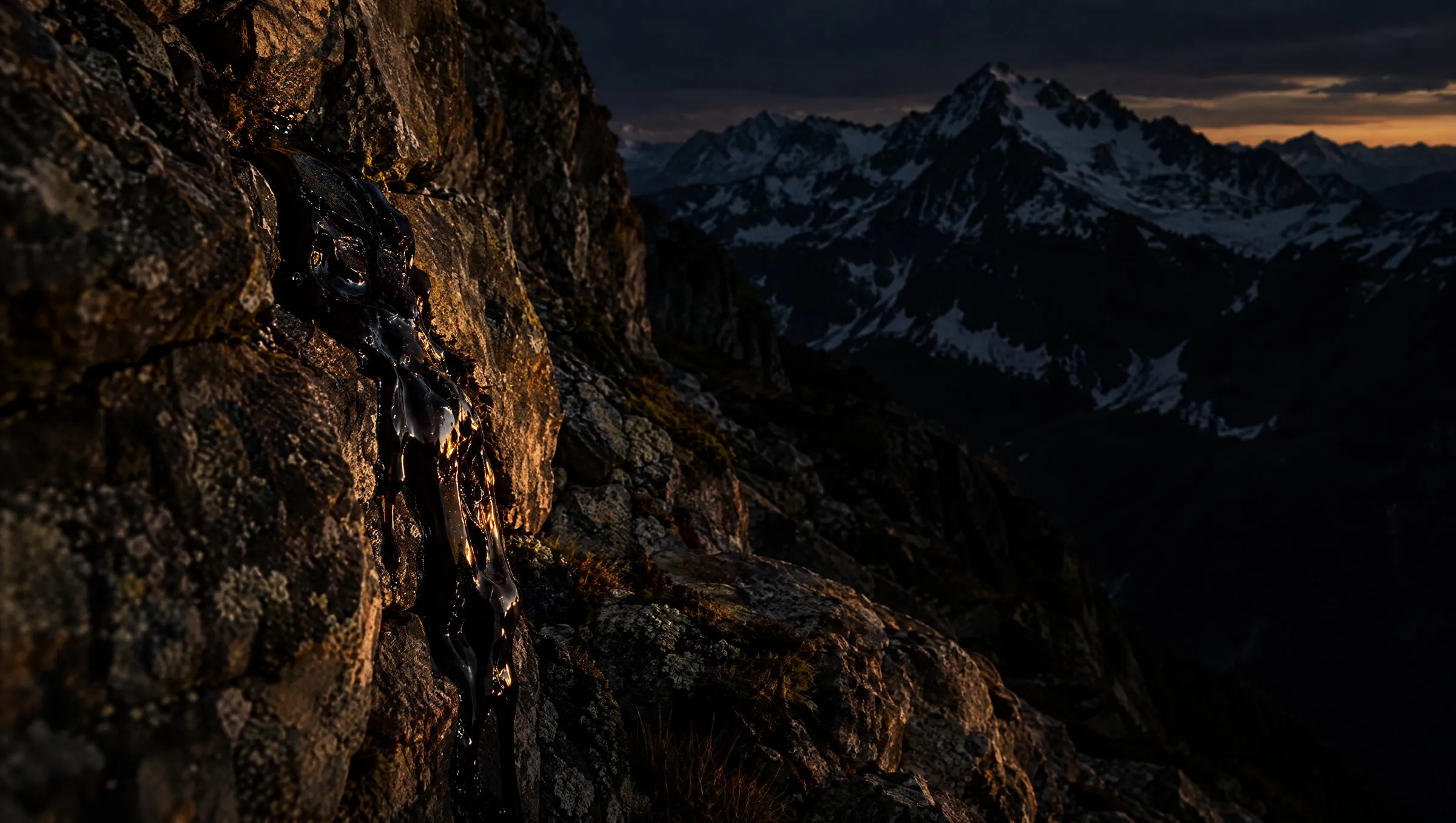
Himalayan and Altai shilajit are the same kind of mountain resin, formed in different ranges from different rock and plants, so their make-up differs from sample to sample. No study has shown that one origin is better for people, which makes origin a useful starting point and the batch lab report the thing that counts.
The names add to the confusion. In the Himalayas it’s shilajit; in the Altai and across Russia it’s mumijo. Here’s where each comes from, what the research has measured across regions, how they’re usually sold, and how to choose a jar.
Where is shilajit found?
Shilajit forms high in mountain ranges across Asia and beyond. In the Himalayas it has been found between 1,000 and 5,000 metres, in India, Nepal, Bhutan and Pakistan, and it is also reported from Afghanistan, China, Tibet and the former Soviet Union 1. Chemists list the Himalayas, the Altai and the Caucasus among its high-altitude homes 2.
Further west and north, it has been studied from the Pamir-Alai mountains of Central Asia 3, and a 2024 review counted almost 20 regions worldwide where it has been reported 4.
| Region | Countries | Name you’ll usually see |
|---|---|---|
| Himalayas | India, Nepal, Bhutan, Pakistan | Shilajit, shilajatu |
| Altai | Russia, Mongolia, Kazakhstan, China | Mumijo, mumie, mumiyo |
| Pamir and Tien Shan | Tajikistan, Kyrgyzstan | Mumijo |
| Caucasus | Russia, Georgia, Azerbaijan | Mumijo |
| Tibetan plateau | China | Zhaxun |
| Hindu Kush and Zagros | Afghanistan, Iran | Shilajit, momiai |
Each range has its own rock, climate and plant life. That’s the root of every real difference between a Himalayan and an Altai sample. For the long story of how these names travelled, read our shilajit history.
What does mumijo mean?
Mumijo is the name used in Russia and Central Asia for the same family of dark mountain resins. One research group describes mumijo, mumie and mumiyo as a collective name for resins ranging from yellow to black, used as a traditional remedy especially in Russia, the Altai, Mongolia, Kazakhstan and Kyrgyzstan 5. Researchers today use “shilajit” and “mumijo” for the same material 6.
The word has been stretched, though. The same group studied a yellow “mumijo” from Antarctica and found it came from snow petrels and was a mix of glycerol compounds, a very different material from Himalayan resin 5. So a name on its own tells you little. The mountain range, the form and the batch report tell you much more.
What have studies measured in shilajit from different regions?
The broad recipe is the same everywhere. A 2025 review found that more than 80% of shilajit’s weight is humic substances, chiefly fulvic and humic acids, and about 20% is calcium, potassium and magnesium, while noting many differences between regions 7. Colour and consistency vary too: shilajit ranges from pale brown to blackish brown 8.
The details are where regions part ways. Several recent lab studies have set samples side by side.
| Study | Samples compared | What they found |
|---|---|---|
| Phenolic acids, 2026 6 | 11 raw samples from Iran, India, Nepal, Russia, Kyrgyzstan | Clear differences by region; one acid found only in the Russian sample |
| Metals, 2026 9 | 12 samples from different regions | Calcium highest in all; iron, zinc and other metals varied |
| Anions, 2025 10 | 14 raw samples from five countries | Chloride ranged from 0.1 to 9.5 mg per gram |
| Phenolic acids, 2026 11 | Commercial samples from Russia, Nepal, Iran | Markedly different phenolic profiles |
The phenolic acid study is the most detailed. It measured nine plant-derived acids. Gallic acid was the most abundant, reaching 2,839 µg per gram in an Iranian sample, and sinapic acid turned up only in the Russian sample 6. Samples from the same country could differ widely too 6.
What about fulvic acid and dibenzo-α-pyrones?
Fulvic acid and dibenzo-α-pyrones are the two constituents researchers point to most often 12. A 2025 analysis of a traditionally collected Himalayan sample from Uttarkashi, India, identified both 2. We couldn’t find a published study that measured fulvic acid or dibenzo-α-pyrones in Himalayan and Altai samples side by side. Claims online that one origin has “more fulvic acid” aren’t backed by published comparisons.
These studies are small, with one or a handful of samples per country, and the origins were declared by suppliers rather than mapped in the field 6. They show that regions differ. They don’t rank them.
Why do samples from different mountains differ?
Because shilajit is made from its surroundings. The authors of the five-region study list the geology of the rock and soil, temperature, humidity, altitude and the local plants as factors that shape its make-up 6.
Field work shows how specific those surroundings can be. On the Tibetan plateau, shilajit appeared mostly between 2,000 and 4,000 m, on sunny slopes and cliffs steeper than 60 degrees, in slate, phyllite, sandstone and limestone with more organic carbon than ordinary rock 13. In the Pamir-Alai, DNA testing picked up 50 plant groups, most often from the carrot and daisy families 3.
The Altai and the Himalayas differ in all of these. Different rock gives different minerals, and different plants leave different organic traces. Our guide to what shilajit is explains how the resin forms, and fulvic acid and minerals in shilajit covers what’s inside.
Is Himalayan shilajit better than Altai?
Not on the evidence available. We found no study that gave people shilajit from different regions and compared them, so nobody can say that one origin suits people better than another.
Many shop pages say Himalayan resin is stronger or purer. That’s a sales line, not a finding. Altai mumijo has a long tradition of its own, and a careful producer in either range can sell good resin. A careless one in either range can sell poor resin. The mountain is where quality starts, and the lab report is where you check it.
Here’s how the two usually compare when you meet them in a shop.
| Feature | Himalayan shilajit | Altai mumijo |
|---|---|---|
| Where | Nepal, India, Pakistan, Bhutan | Russia, Mongolia, Kazakhstan |
| Tradition | Ayurveda | Russian and Central Asian folk use |
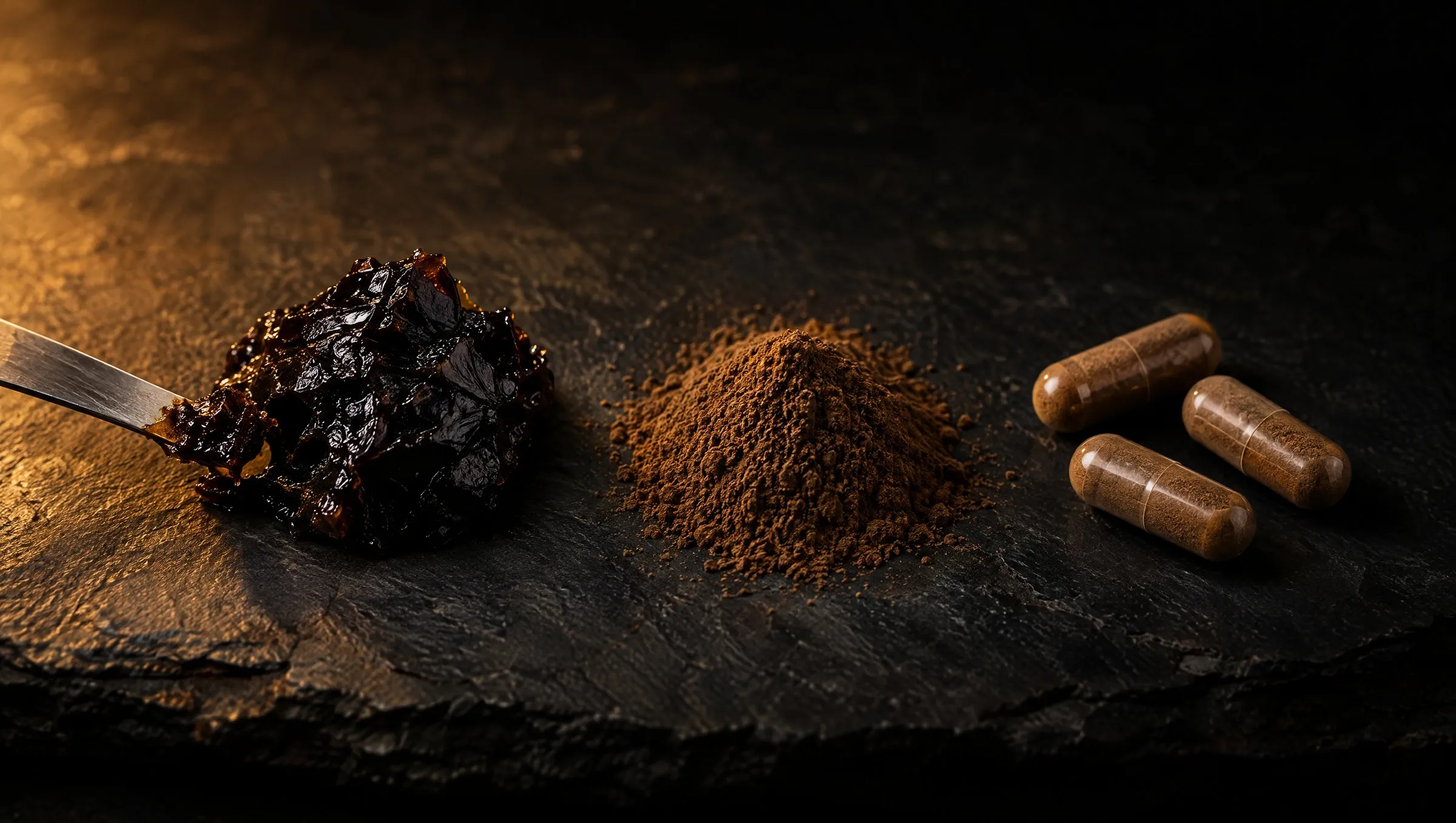
| Usual form | Raw or cleaned resin in a jar | Purified tablets; resin too |
| What to check | Batch lab report, nothing added | Batch lab report, other ingredients |
How is Altai mumijo processed compared with Himalayan resin?
This is often the biggest practical difference. Mumijo from the Altai and Central Asia is very often purified, dried and pressed into tablets. In a 2025 lab study, the three Russian and two Kyrgyz mumijo supplements tested were all tablets 10. Himalayan shilajit reaches Europe mostly as resin, though manufacturers also process it into capsules 1.
Purifying usually means dissolving the raw material in water, filtering out grit and drying it again. A tablet usually needs other ingredients to hold its shape, so the label lists more than shilajit. Processing doesn’t automatically mean cleaner, either: in a 2025 study, some shilajit supplements held more thallium than the crude shilajit tested 14.
Our guide to shilajit resin vs capsules compares resin, tablets, capsules, powder and gummies in detail.
Do heavy metals depend on where shilajit comes from?
They depend on the rock, so yes, and on the batch too. A 2024 review counted around 65 metals reported in shilajit, including lead, arsenic, cadmium and mercury. Most samples were below WHO and FDA limits for herbal medicines, but a few studies found levels above them 4.
The results swing between studies. A 2022 analysis of shilajit from India and Pakistan found several toxic metals above standard limits, with mercury detected only in the Indian sample 15. In the 2026 study of 12 samples from different regions, toxic metals were below established thresholds 9.
No region is clean or dirty by default. That’s why a test of the batch in your jar matters more than the name of the mountain. Our guide on how to read a shilajit lab report walks you through the figures line by line.
What do Himalayan and Altai shilajit taste and feel like?
Taste is personal, and every batch is a little different, but people describe some broad patterns.
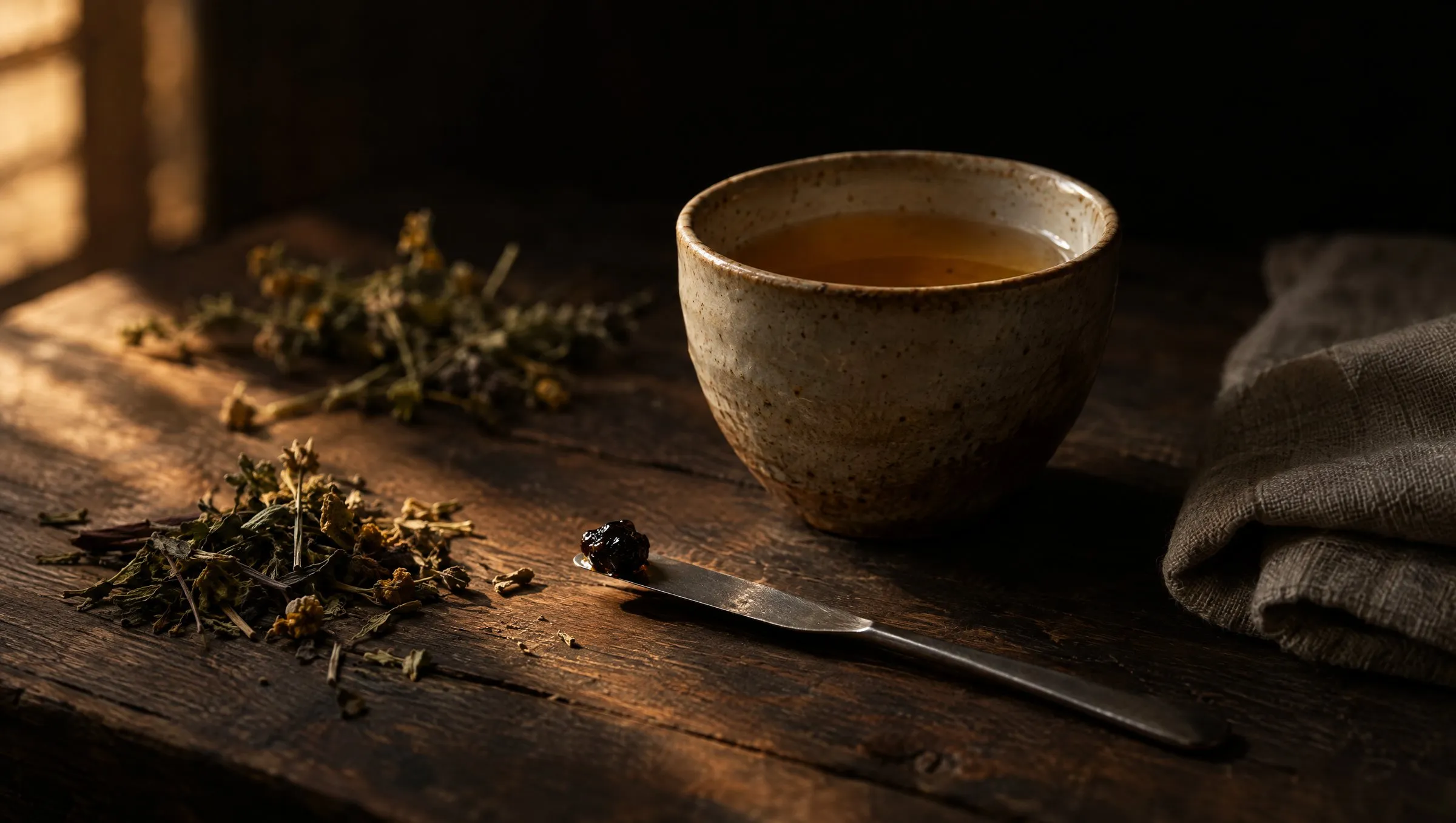
Himalayan resin usually comes as a glossy, near-black paste. It goes firm in the cold and soft and sticky in a warm hand. Stirred into a warm drink, it melts into an amber-brown cup with an earthy, smoky, bitter taste and a mineral finish.
Altai mumijo is most often met as small brown tablets. People describe them as bitter and earthy, and handy: there’s no stickiness and nothing to measure, since the material has been dried and pressed. Raw Altai resin, where you can find it, is described much like Himalayan: dark, sticky and strongly flavoured.
Hilasti’s resin is the Himalayan kind: raw, glossy and dark, with nothing added to soften the taste. Many people stir it into black tea or warm milk, and our guide on how to take shilajit has the drinks people like best.
How do you choose between Himalayan and Altai shilajit?
Choose a jar rather than a mountain. Three checks do most of the work.
- A named origin. Look for the country and the mountain range, ideally the region too. Under EU food labelling rules, the country of origin must be shown wherever leaving it out could mislead you about where a food comes from 16. A vague “mountain shilajit” tells you little.
- The batch report. Ask for a lab report from an accredited laboratory that names the batch and gives figures for lead, cadmium, mercury and arsenic.
- The form. Decide whether you want raw resin with nothing added or a purified tablet or capsule. If it’s a tablet, read the full ingredients list.
| Check | What good looks like |
|---|---|
| Origin | Country and mountain range named on the label |
| Lab report | Accredited lab, batch number, metal figures |
| Form | Clear about resin, tablet or capsule |
| Ingredients | Resin: shilajit only; tablets: every ingredient listed |
If a seller can’t answer these, the origin on the label matters less. Our guide to real vs fake shilajit covers the warning signs, and our FAQ answers the common questions on storage and serving.
Where does Hilasti’s shilajit come from?
Our resin comes from the Nepalese Himalayas, harvested at around 4,800 m, roughly the height of the summit of Mont Blanc. It’s sold raw, with no fillers or additives, and it’s suitable for vegans.
Origin is only our starting point. Batch 101 was tested for lead, arsenic, cadmium and mercury by Sekargas Hamilton, an accredited laboratory in Lithuania, and every figure is on our lab results page. Each jar comes with a steel spatula, and half of its wide end is about one 100 mg serving. At that size, a 30 g jar holds around 300 servings.
Taste the Himalayas for yourself
If you’d like to start your own morning ritual, our raw Himalayan shilajit resin is harvested in Nepal at around 4,800 m, with nothing added, from a lab-tested batch. The steel spatula is in the box, so all that’s left is a warm cup and a quiet minute. Both jar sizes are in our shop.
This article is for information only and isn’t medical advice. Speak to your doctor or pharmacist before taking a supplement, especially if you’re pregnant, breastfeeding, take medication or have a health condition.